MusaRai
CallumStephenDiggle
CallumStephenDiggle

patreon


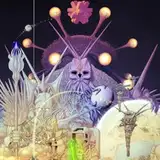
Concavia: The Dark Lord Tàmhas.

The worship of Tàmhas in Concavia resembles certain strands of Gnosticism in our world. Gnosticism is a broad family of beliefs, but to generalise, many Gnostics saw the material world as flawed or corrupt, they saw matter itself as a prison for the soul which carried the divine spark of the true hidden god. In some traditions, the creator of the world (the Demiurge) was seen as a false god who brought about all pain and suffering in the creation of this imperfect realm. Beyond him was the true, hidden God, the supreme being, who existed before all things. Gnostics sought to awaken the divine spark within themselves and return to this higher reality through gnosis (secret knowledge). These were not uniform teachings, but a set of loosely related traditions evolving over centuries.

In a similar way, Tàmhas-cultists believe Tàmhas to be the supreme being, or Monad. Before the light of Leuada, there was only darkness… there was Tàmhas. To borrow the Gnostic framework, Leuada here would play the part of the Demiurge, his shaping of the world from Tàmhas’ broken body was, in the cultists’ eyes, a corruption of the eternal order of peace and harmony. What should have been an unchanging and undying realm of inaction was refashioned into a mortal world of pain, fear and endless cycles of birth and death.

The worship of Leuada and his children, the gods, is life-affirming. It celebrates the sun, the world, and the span of time given to each soul in this life. By contrast, the worship of Tàmhas is life-denying, resting on the promise of an afterlife and devaluing the present in favour of rewards beyond, granted only to those who serve him here and now.

Their version of creation inverts the tale of beginnings, casting Tàmhas as a true god wronged. Together with Leuada, Tàmhas forged the golden ring-world Gelh as a place of meeting. From the loam of Gelh he shaped Mehter in love. Yet in this telling, Leuada, driven by desire, stole the first kiss and with it breathed life into her. Thus Mehter fell under his spell, bound to him alone, and Tàmhas’ work, meant as his beloved, was seized away.

When Tàmhas found her alone at last, he sought to break Leuada’s spell. First he pleaded with words, but when they failed he forced himself upon her, hoping to bind her to himself. Mehter cried out, and Leuada, hearing her, came soaring through the air to strike him. Then battle was joined. Leuada triumphed, and with his corrupting hands he shaped the imperfect world of Concavia from the perfect form of the true god. From this act flowed all sorrow. Mortals were fated to sicken and die, beasts to devour one another, and fear to hold sway over all.

Dhegoma, the ill-begotten son of Tàmhas and Mehter, learned the hidden truth in the lowest depths and swore to help his father reclaim his body. The Dwalves too believe their cause to be just. After the war of heaven, when their father was broken and cast beyond the world to join Tàmhas, they took up his oath. Through the long ages they have laboured without rest, seeking vengeance for the wrongs done to the true god and his heir.

Since they see the world as inherently evil, the devotees of Tàmhas often follow harsh paths of asceticism. They practise self-denial, renounce worldly pleasures, and seek to sever all earthly ties. Such disciplines are meant to cultivate the immortal spark of the soul and to master the lower, animal nature of the flesh.

Yet this path of darkness does not end only in renunciation. At times it leads to unnatural gifts, bestowed by the banished powers in recognition of the devotee’s devotion and their rejection of the corporeal world. These dark blessings may grant a longer span of years in which to serve the Lord of darkness, or else confer powers of divination, drawing upon the hidden wells of his domain. Illusion and dream-sorcery might be drawn from Swoma, while the strength of stone and earth could be channelled through Dhegoma himself.

Worship of Tàmhas is rare among mortals. Most peoples keep to traditions of ancestor-veneration, tracing their line back through the Alves and Albes to the gods themselves. Yet some, like the subterranean Maäliset, give honour to the Dwalves. Among the Merefolk too there are those who follow the deep powers, though both peoples harbour splinter groups who turn instead to the lords and ladies of light.

Yet now the world has changed. An impenetrable mist has risen in the north. Dwalves are seen mustering their hosts. The seal at the base of the hourglass stairwell, which holds Tàmhas beyond the world, is said to be under threat. These portents are what set in motion the tale of Concavia.

Each age of Concavia has closed with a world-changing event. The Days of Gold ended with the slaying of Tàmhas and the shaping of Concavia and the sundering of Gelh. The Days of Silver fell with the war of heaven, the death of the gods, and the sealing of the hourglass stairwell. The Days of Copper were ended by the fall of Talanā, the great flood, and the rise of the land-wights.

Now the Days of Iron may be nearing its end. Will the forces of darkness make it the final age, or will the cycle renew?

Anyway I think that’s a pretty good introduction to the motivations of the followers of the dark god, Tàmhas. The upcoming post about Leuada will provide another perspective.

Concavia: The Dark Lord Tàmhas.

Comments

I'm sorry but... why does his crotch have eyes?

RyGuy

Haha that’s about all they have in common

Callum Diggle

he boutta be the deicide of concavia with all those spikes lol

Miningation

Correct, they let him live. In the epic poem that I’m still working through (writing in Old English alliterative verse is very hard), Leuada, upon seeing that the baby was not his, immediately wanted to banish him outside to be with his true father. Here’s an early look at the next section of the poem relevant this subject: ⸻ Soon it was seen || seed grew in Mehter. Black was the baby || borne of her. Sharing no sheen || as shining kin, But bore the blackness || of baleful Tàmhas. Her son’s seeming || swart as nightfall. Rage then returned || red as dawn In the Bright-lord || burning with wrath. So strife once more || struck their bond. Leuada would drive || the dark one out, To fling the son || to father afar. Mehter, mourning, || made her plea: “Though Tàmhas’, || so too is mine. Half his heart || is wholesome yet. No babe is born || bent fully to ill.” Soul he saw clearly, || and softened in mood, Mehter the mighty || no monster bore! “Dhegoma” they dubbed him, || dark-broad earth, For his form bore || his father’s likeness, Tàmhas’ shape, || whose shell was the land. ⸻ So in this passage you see that Mehter manages to change Leuada’s mind and show him that part of her lives on in Dhegoma. He is not wholly of Tàmhas, for in him lives her light, the light of his beloved. Besides, no babe is born evil. You’re right to guess that Dhegoma was the black sheep of the lot and was not treated the same as his siblings. Nevertheless, Swoma and Dhegoma were able to grow up together and fall in love. Dhegoma created spaces underground where Swoma’s fungi could thrive, in turn she lit his halls with a soft glow that he loved. For a long time they dwelt hidden away from the rest, feeling like outsiders to the other divines. They had their marriage and children, the Dwalves, in secret deep in the earth. Down there, Dhegoma fell under Tàmhas’ influence, though to the followers of Tàmhas, Dhegoma was convinced by his father, not put under some spell. Swoma at first did not like this turn in Dhegoma, but her love for him kept her by his side, and she too eventually surrendered to Tàmhas’ powerful will. The war in heaven began because the children of Leuada and Mehter were sent forth to find their lost siblings. When they did, they were held a feast and were gifted their magical items, each god being associated with one, Woodirs trident, Firalahs bow… so on. Pleased with this, they wandered wide and abroad for centuries (time is not perceived the same by immortals), this period is where many of the grand legends of gods and heroes come from. Mehter, ever watchful, assumed that they were still searching. But when they returned at last and told of their meeting with Dhegoma and Swoma, Mehter was most displeased that they had found them and had not brought them back to the moons of Gelh. She sent them again to fetch Dhegoma and Swoma. When the gods and goddesses went to find them the second time, they passed the dining hall where the gifts were given and stumbled upon a stairwell in the shape of an hourglass. Once they had crossed the narrowest point in the stairwell, the opening revealed to them that Dhegoma, Swoma, and their host of Dwalves were burrowing through Concavia to bore a hole in the outer shell. Realisation dawned on the gods sent from Gelh as to what they had stumbled upon, and this quickly broke out into violence. This is what is called the War of Heaven. The combined might of Duneos, Woodir, Firalah, and Florawah found Dhegoma, Swoma, and their host of Dwalves to be more than their match, with the sheer number of Dwalves overwhelming them. You’ve pieced it all together very well with the limited lore I’ve revealed so far. I hope I answered all of your questions here. I’ll try my best to get the second part of the epic poem, covering the Age of Silver, out soonish. Obviously Humanity Lost takes priority, but I’ll keep chipping away at it here and there.

Callum Diggle

I wonder, if Dhegoma was able to grow up and fall in love with Swoma, that implies that Leuada and any other gods around that time did not immediately kill Dhegoma. Though since the Dwalves were born and kept away from the other gods deep in the earth, its probable Dhegoma and Swoma's love for each other would not have been well liked by the other gods. If Dhegoma did really love Swoma, it implies Dhegoma was not anything like his father. Why, then, did Dhegoma choose to take the dark lords side in the war? I think that even if the other gods let Dhegoma live, they might not have treated him very well outside of that. Not to mention the possibility of the other gods finding out about Dhegoma's relationship with Swoma and them finding and killing their children. Add to this the possibility of Dhegoma feeling like he should serve Tamhas because he's his father and because Tamhas may have lied to Dhegoma about what he did to Mehter, and you may start to see why things possibly happened that way. Did things happen that way? Sorry if these topics are uncomfortable for anyone reading.

Erika Spooner

Thanks a lot, Maeve! It’s a sensitive thing and I’ll try to give you as appropriate an answer as I can given the subject matter. Sorry also if it made you uncomfortable. I totally hear where you’re coming from and I was apprehensive to include it myself. When I first drafted this, I actually wrote it as “pressed a kiss,” but then I remembered that this was the moment in which Dhegoma was conceived, so it had to be included as a pivotal moment and as a justification for Leuada’s wrath. To us moderns, rape is treated with the appropriate disgust as an abhorrent act. The troubling thing about the ancient past is that such acts weren’t always viewed with the severity that they are now. Penalties varied by class and membership of a society, if a victim was low-class, a slave, or a foreigner, there was very often little to no punishment at all. For example foundational myth of Rome was the “Rape of the Sabine Women,” which is said to be how the powerful Roman families were formed. In this origin myth of theirs, the Romans saw no immorality or cause for shame. In war, sexual violence was accepted, even ritualised, as a mark of dominance. In both myth and history, the lines between rape, abduction, and forced marriage were also blurred. It is through this dark and twisted logic that the cult of Tàmhas frames their lord’s act, not as shameful or immoral, but as an assertion of strength and a reclamation of what was rightfully his. To have them disavow their god because of this would be somewhat anachronistic for the kinds of societies to which his followers belong. Tàmhas’ worshippers don’t see it as damning. That doesn’t make it any less disturbing to us today and it isn’t supposed to. People aren’t meant to like Tàmhas; he’s the literal god of darkness. But I wanted his devotees to have depth, to be driven by a worldview that feels internally coherent rather than flat-out villainy. This sounds reductive to say, but the followers of Tàmhas aren’t meant to be the “good guys” in the narrative of Concavia. I just wanted them to have a justification within their own moral framework for why they serve the dark lord, not merely evil for the sake of evil, like two-dimensional villains.

Callum Diggle

Fascinating. Personally I'd remove the implications of rape in this version, turn it into a kiss or an embrace, since that fits a good deity better, but other than that I really love it.

Maeve Hightower


More Creators & Models