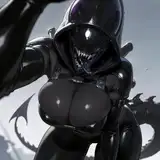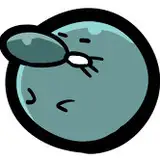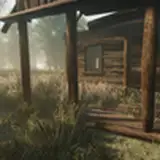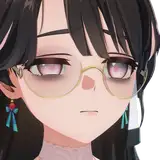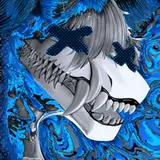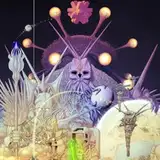
While I’m working on the next page, here is some concept art for Concavia to keep you going.
In case you don’t remember previous details about the Dwalves, the race of Dwalves are the offspring of the dark god Dhegoma and the goddess Swoma, who were born in secrecy in the depths of Concavia. Their father, Dhegoma, was the ill-begotten child of the primordial goddess Mehter and the primordial god of darkness, Támhas. Thus the Dwalves were born of the line of darkness, and as a result their forms are pitch without edge.
Dwalves are shadowy beings that hate the light. They cannot travel in the day without possessing animals and wearing their skin. Sunlight turns their bodies to stone, but open flame also weakens them and stiffens their shape. It stops them from shapeshifting or slipping through cracks in surfaces.
In bygone times of myth and legend, Dwalven hosts fought in service of Támhas to oppose the forces of light. They were routed and scattered throughout the dark halls of the earth. In this calamitous war, all of the gods and goddesses were slain, save for the goddess Mehter and the sleeping sun-god Leuada. As a result of this ancient war, the loyalists of Támhas were forced outside the world and were held there by a warding mark, a magical sigil that sealed them away. Mehter stationed the Alves there to guard this seal and to ward off Dwalves who might regroup in an attempt to break it.
In the ages since, the Dwalves have made many attempts to free their father, grandfather, and mother from the void without. Some plots came close to success, such as their infiltration of the Talanean empire which brought on its fall and the Great Flood. Now they rally again, and a dark cloud gathers in the north…
I’ve based the Dwalves in Concavia on my reading of source documents concerning the dwarfs of Germanic myth and legend. In various sources, they are described as dark elves, intermediary beings between gods and mortals. They are dark in the sense of being shadowy and elusive, slipping into people’s ears and noses while they sleep to cause nightmares or illness.
They are called dwarfs not because of small stature, but because they can shrink and slip through any crack or hole they choose. They may travel in daylight in the form of animals, but the sun is harmful to them. This image of the dwarf from myth and legend is far removed from popular fantasy portrayals. They are more like spindly shadows, the word “spider” is sometimes used to describe them.
So in Concavia, I have tried to be more faithful to the old sources, to recover the image of the dwarf (or Dwalf, as I call them) as a truly terrifying, eldritch, shadowy figure that can shape-shift, vanish through cracks in stone, and phase through sand.
You’re probably wondering, how can anyone kill a shadow that can vanish in a moment? Well, I’ve pulled their weaknesses from the same old sources and baked them into Concavia’s lore. They are vulnerable to all forms of light, including fire and are also harmed by iron and the sound of iron clanging on iron.
Here’s an excerpt from Concavia regarding iron:
“Iron is the blood of Támhas. It runs red in the stone. It is the ore men also call bloodstone.
The seams of iron that snake underfoot and through the high hills were cooled and set after Támhas’ soul was sundered from his shape, and his soulless shell was made into our world.
To the Dwalves, iron in its raw form brings no hurt. They dwell among it, delve through it, and carve their halls deep where iron threads wind like old scars. But once iron is taken and wrought by fire and will, it becomes more. Wrought iron strikes dread in the hearts of Dwalves, for it shows sway over their lord. What was once his life-blood has been tamed and turned into a thing to be wielded like any tool. To wield such a thing is to bear a token of Támhas’ overthrow.
The Dwalves, lesser than Támhas in might and standing, and born of his shadow, feel the bite of worked iron’s edge. The din of iron on iron also weakens them and keeps them from shifting their shape or slipping through stone. Most of all they hate the ringing of iron bells.”
“Who is doomed || Dwalves to find,
Mark this lay || to mind now bind.
Gift a mistress gold || give a maid silver,
Copper for craftsmen || cast but a sliver.
For the shape-shifter || in stone-bound hall,
Smith shaped Iron || shall bring his fall.”
Let me know what you think down in then comments 👇🏻
Callum Diggle
2025-09-12 10:13:24 +0000 UTCCallum Diggle
2025-09-12 10:08:40 +0000 UTCErika Spooner
2025-09-12 02:24:34 +0000 UTCMaeve Hightower
2025-09-11 19:07:46 +0000 UTCCallum Diggle
2025-09-11 17:30:40 +0000 UTCDaniel Bensen
2025-09-11 16:55:48 +0000 UTCCallum Diggle
2025-09-11 10:59:39 +0000 UTCDaniel Bensen
2025-09-11 10:21:53 +0000 UTC